
No story about the Baker Street Irregulars would be complete without mentioning its founder, the American author Christopher Morley. In the 1930s, Morley, along with his colleague Vincent Starrett, was at the center of the nascent movement to study and celebrate Sherlock Holmes, an effort which has blossomed far beyond their wildest dreams.
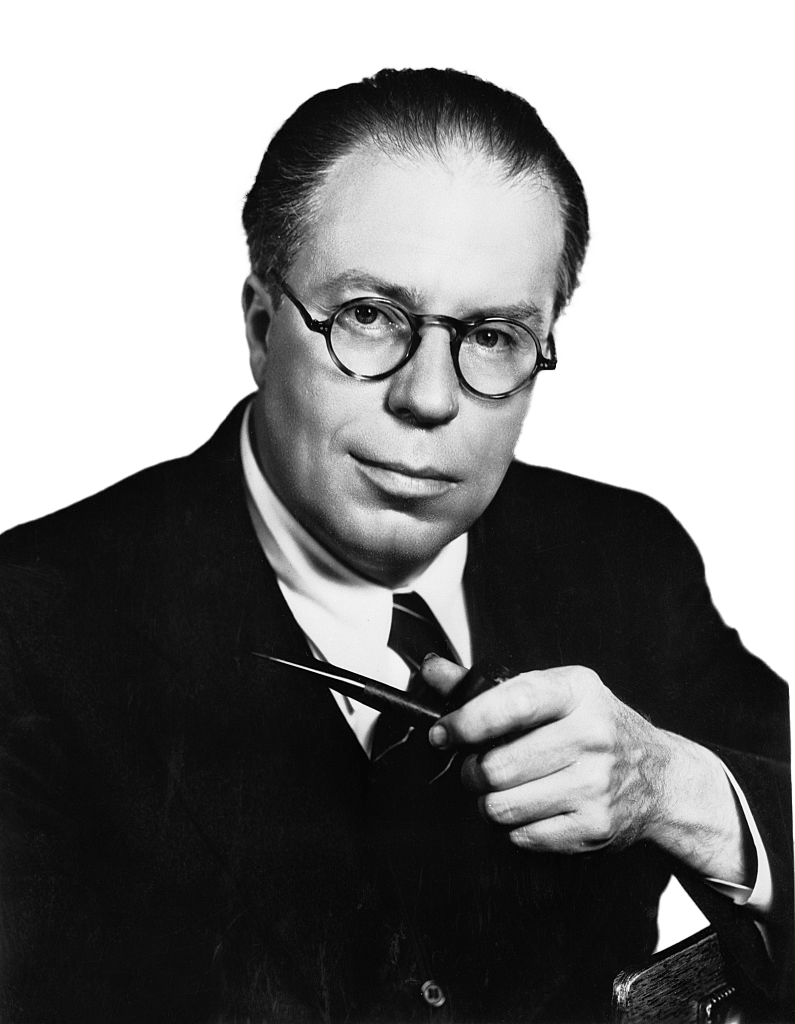
Christopher Darlington Morley was born in Bryn Mawr, Pennsylvania, USA on May 5, 1890. His parents had emigrated there from England the year before when his father, Frank, accepted a position teaching in the math department at nearby Haverford College. Christopher spent his first ten years at Haverford, and then relocated to Baltimore, Maryland, in 1900 when his father was named head of the math department at Johns Hopkins University.
It was in Baltimore that Christopher – known to family and friends as “Kit”– began his lifelong interest in Sherlock Holmes. Going beyond reading the stories, around 1902 he organized three friends into his first club for studying the Canon; appropriately, they called themselves The Sign of the Four. Later, he introduced his two younger brothers, Felix and Frank, to the stories, quizzing them about each one they read … the beginning of a tradition carried on in Sherlockian groups to this day.
After finishing primary school in Baltimore, Kit returned to Haverford College in 1906 for his B.A. On his graduation, he was awarded one of the prestigious Rhodes scholarships for continued studies at the University of Oxford. He spent three years at Oxford, graduating in 1913. While there, he had his first book published, a volume of poetry entitled The Eighth Sin. He also met Helen Fairchild, an American tourist who later became his wife.
On returning to the United States in 1913, Morley decided on a career in literature. He got a job with the publishing house Doubleday, Page and Company, located on Long Island, New York, in a suburb of New York City. There, he reviewed submissions, suggested new authors to publish, and learned the basics of the book trade. He also started writing works of his own to earn extra money. After four years, Kit left Doubleday to concentrate on writing and editing. By 1920, he had earned himself a daily column in the New York Evening Post newspaper and an assignment on its weekly literary supplement. With the income from these positions he was able to purchase a home in Roslyn Estates, Long Island, which he called Green Escape. He and Helen remained there for the rest of his life, and raised their four children there.
Morley was a gregarious man who enjoyed having a good time with friends. While working in New York City, he organized two groups, the Three Hours for Lunch Club, and the Grillparzer Club, which met occasionally for lunch and drinks and good conversation. The fellowship shared in these gatherings helped lead the way to the creation of the Baker Street Irregulars.

When the Post literary supplement was canceled in 1923, Morley and some colleagues established a magazine of their own, The Saturday Review of Literature. For more than 14 years, Kit authored two weekly features: “Trade Winds,” an inside look at what was current in publishing, and “The Bowling Green,” a column of personal reflections. In the mid-1920s, Morley began mentioning Sherlock Holmes in “The Bowling Green.” The references to Holmes increased in the 1930s, and the column became the unofficial newsletter for Holmesians in the United States. It was in “The Bowling Green” that Christopher Morley first suggested that Holmes’s birthday was January 6, and described the initial meeting of The Baker Street Irregulars in January 1934. Later columns printed the group’s Constitution and Buy Laws (which are still honored by the BSI) and the famous Sherlock Holmes crossword puzzle created by Kit’s brother Frank, which was used as a test for the earliest members of the Irregulars.
The Irregulars met three times in 1934. Their first was a small gathering on January 6 to celebrate Sherlock’s birthday. On June 5, another small group held the BSI’s first formal meeting, which was scheduled so the Irregulars could claim to be older than the Sherlock Holmes Society in London, which was meeting the next day. Finally, the Irregulars held their first official dinner on December 7. This event included many respected Sherlockians, who delivered papers, made toasts, and set the tone for future meetings of the group. After 1936 Christopher Morley grew tired of having to arrange these gatherings, and in 1940 turned over organizing them to Edgar W. Smith, who made them an annual event. Smith later founded the Baker Street Journal and succeeded Morley as head of the BSI.
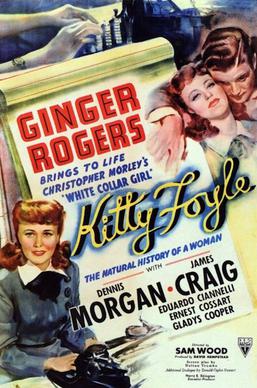
Christopher Morley was a popular American author from World War I until the 1940s, writing in almost every genre. His most successful work was the 1939 novel Kitty Foyle, which was made into an award-winning film in 1940. Sherlockians remember him most for his important writings about the Canon, however. These include the essay “In Memoriam Sherlock Holmes,” which he composed in 1930 as the introduction to the first one-volume edition all the Sherlock Holmes stories; Sherlock Holmes and Doctor Watson: A Textbook of Friendship; and his many submissions to the Baker Street Journal. Most of these writings can be found in The Standard Doyle Company: Christopher Morley on Sherlock Holmes (New York: Fordham University Press, 1990), an invaluable volume edited by Steve Rothman, former editor of The Baker Street Journal and the foremost expert on Christopher Morley. Morley’s writings became less popular after World War II, when they were viewed as old-fashioned. He had a series of strokes in the 1950s, which greatly slowed his ability to write and to take an active role in the Irregulars. Christopher Morley passed away at Green Escape on March 28, 1957, and is buried nearby in the cemetery in Roslyn, Long Island. He continues to be revered as the founder of the Baker Street Irregulars and one of the most significant of Sherlockians.

 La gazette du 221 B